Booking a charter flight requires more than selecting a destination and travel date. You need accurate details about passengers, luggage, airports, scheduling, aircraft preferences, safety expectations, and budget. Preparing this information helps providers recommend the right aircraft, deliver precise pricing, and ensure a smooth, efficient, and comfortable private aviation experience.
Before booking a charter flight, gather key details such as travel dates, passenger count, preferred airports, luggage requirements, budget range, aircraft preferences, and safety considerations. Providing this information allows charter providers to match you with the right aircraft, generate accurate pricing, and plan a safe, seamless flight experience.
Why Preparation Matters Before Booking a Charter Flight
Charter flights operate differently from commercial airline travel. Each trip is customized based on the traveler’s needs, which means accurate planning is essential. Every detail—from passenger count to luggage weight—affects the aircraft type, flight route, crew requirements, and overall cost.
When travelers prepare information ahead of time, the booking process becomes faster and more efficient. Providers can generate accurate quotes, confirm aircraft availability, and plan logistics without delays. Preparation also reduces the likelihood of unexpected fees, scheduling conflicts, or last-minute aircraft changes.
In addition, preparation enhances the travel experience itself. When the provider understands your purpose for travel, comfort expectations, and onboard needs, they can personalize everything from cabin setup to catering. This level of planning is what makes private aviation seamless and stress-free.
Key Information You Need Before Booking a Charter Flight
1) Travel Dates, Time, and Flexibility
Travel timing is one of the most important factors in charter flight planning. Aircraft availability, crew scheduling, and airport slot access all depend on your schedule.
You should prepare your preferred departure and return dates, along with a time window if possible. Even a few hours of flexibility can make a difference in aircraft options and pricing. Some travelers also consider alternative travel days to increase availability.
Flexibility allows providers to identify opportunities such as repositioning flights, better routing options, and improved scheduling efficiency. It also helps avoid peak-demand pricing during major events, holidays, and high-traffic seasons.
Clear communication about your schedule ensures the aircraft, crew, and airport logistics are aligned with your travel needs.
2) Passenger Count and Special Needs
The number of passengers determines the aircraft category, seating configuration, and onboard services required.
You should confirm the total number of travelers, including children, companions, or staff members. If anyone requires assistance—such as mobility support, medical equipment, or accessibility accommodations—this information must be shared early in the process.
Travel purpose also matters. Executive teams may need onboard meeting space, while families may prioritize comfort and privacy. Special dietary needs, security requirements, and VIP preferences can also influence cabin preparation.
Providing complete passenger information ensures the aircraft is properly equipped and configured for safety, comfort, and regulatory compliance.
3) Departure and Arrival Airports
Private aviation offers access to thousands of airports, including smaller regional facilities that commercial airlines do not serve.
You should identify your preferred departure and arrival airports and note any alternative locations nearby. This flexibility can help reduce ground travel time, avoid congestion, and expand aircraft options.
For international trips, documentation requirements, customs clearance procedures, and immigration facilities must also be considered. Some airports are better equipped for international arrivals, while others may require additional planning.
Ground transportation arrangements should also be discussed in advance. Coordinating transfers between the airport and final destination helps create a seamless door-to-door experience.
4) Luggage and Cargo Requirements
Luggage weight and size play a major role in aircraft selection and flight planning.
You should provide an estimate of how many bags will be brought, along with any oversized items such as sports equipment, musical instruments, or professional gear. Pets, medical equipment, and cargo items must also be disclosed in advance.
Aircraft have specific weight and balance limits. Accurate luggage information helps ensure safety and determines whether additional space or a larger aircraft is required.
Planning luggage ahead of time also prevents last-minute adjustments, which can affect scheduling, routing, and fuel calculations.
5) Budget Range and Pricing Expectations
Private charter pricing varies based on aircraft type, distance, fuel, crew, airport fees, and travel timing.
Providing a general budget range allows charter providers to recommend suitable aircraft options without compromising safety or comfort. It also helps avoid unnecessary back-and-forth adjustments during the quoting process.
Travelers should consider whether they prioritize luxury amenities, speed, efficiency, or cost optimization. These preferences directly influence aircraft recommendations.
Being transparent about budget expectations ensures a smoother booking process and allows providers to focus on delivering the best possible value for the trip.
6) Aircraft Type and Cabin Preferences
Each aircraft category offers different capabilities in terms of range, seating capacity, cabin space, and onboard amenities.
Travelers should consider what matters most for their trip, such as:
- Cabin comfort and seating layout
- Wi-Fi connectivity and workspace
- In-flight entertainment
- Sleeping arrangements
- Catering services
Short regional flights may only require a light jet, while long-distance international trips often require a heavy jet with extended range and additional comfort features.
Sharing preferences early ensures the recommended aircraft aligns with both practical requirements and personal expectations.
7) Safety Credentials and Operator Standards
Safety should always be a priority when booking a charter flight.
Travelers should verify the operator’s certifications, pilot experience, maintenance practices, and insurance coverage. Recognized safety audits and compliance standards provide reassurance that the aircraft and crew meet industry requirements.
Reputable charter providers are transparent about their safety processes and documentation. Asking questions about safety policies is an important part of responsible planning.
Understanding these factors helps travelers make informed decisions and ensures peace of mind throughout the journey.
8) Trip Purpose and Experience Expectations
The purpose of the trip shapes the overall charter experience.
Business travel often requires productivity-focused features such as quiet cabins, onboard Wi-Fi, and meeting-friendly seating arrangements. Leisure travel may prioritize comfort, privacy, and customized catering.
Special events, medical travel, and VIP transport may require additional coordination, security planning, and personalized service.
Sharing your goals for the trip helps charter providers tailor the experience—from onboard services to scheduling and ground arrangements—so every aspect aligns with your expectations.
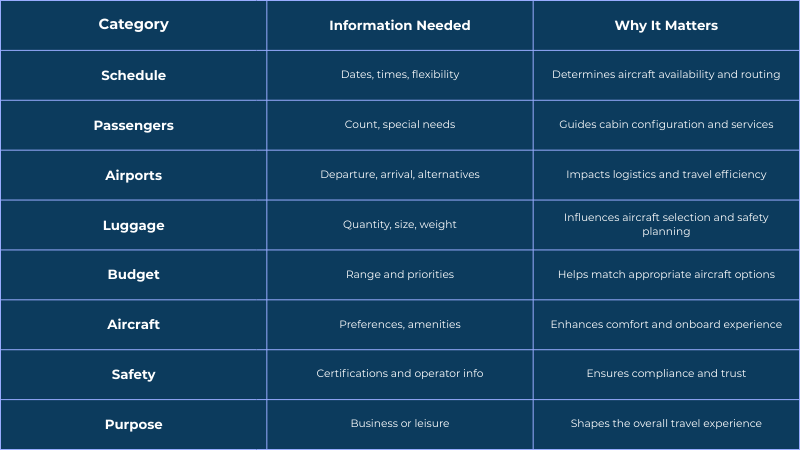
Charter Flight Planning Checklist
Common Mistakes to Avoid Before Booking
Many first-time charter travelers overlook details that affect pricing, safety, and scheduling.
Common issues include:
- Waiting until the last minute to book
- Underestimating luggage size or weight
- Not confirming passenger details
- Choosing aircraft based on appearance instead of trip needs
- Ignoring alternative airports
- Overlooking international travel documentation
Planning early and sharing accurate information helps avoid these challenges and ensures a smoother booking process.
How Charter Providers Use Your Information
The information you provide guides every step of the planning process.
Charter providers use it to:
- Match the aircraft to passenger count and travel distance
- Calculate fuel requirements and routing
- Schedule pilots and crew members
- Confirm airport availability and fees
- Generate accurate pricing quotes
- Personalize onboard services and experiences
This process ensures the flight is safe, efficient, and tailored to the traveler’s needs.
Plan your next charter with confidence.
Worldwide Jet guides you through every detail—from aircraft selection to logistics—ensuring a seamless private aviation experience.
Request a personalized charter quote today to find the right aircraft for your schedule, passengers, and travel goals.
Speak with a charter specialist now to explore aircraft availability, trip planning options, and tailored onboard services.
Choose Worldwide Jet for precision, safety, and exceptional service on every flight.
Frequently Asked Questions
What information is required to book a private charter flight?
You need travel dates, passenger count, airports, luggage details, budget, aircraft preferences, and safety considerations.
How far in advance should I book a charter flight?
Booking one to two weeks in advance is recommended, though last-minute charters may be possible depending on availability.
Does luggage affect charter pricing?
Yes, luggage size and weight influence aircraft selection, routing, and overall trip cost.
Can I choose any airport for a charter flight?
Most airports are accessible for charter flights, including smaller regional airports, depending on runway and operational requirements.
Is private charter safer than commercial travel?
Safety depends on operator standards, pilot qualifications, and aircraft maintenance practices.
Contact us
"*" indicates required fields
Our Vision
Worldwide Jet’s vision is to always be the first choice in the industry by continuously redefining private luxury travel.
Get in touch today to book your next luxury flight.